AFTERLUMA JOURNAL • CURATED EDITORIAL ARCHIVE
The Face as Document, the Face as Fiction: A Short History of the Fine Art Portrait
A portrait has never been a simple copy of a face. It is an agreement between the person in front of the camera or the easel and the person looking, and its terms have been rewritten more than once over two thousand years. We start briefly with painting, then stay longer with photography, where the story gets most interesting.
Roman Egypt: the gaze that finds us
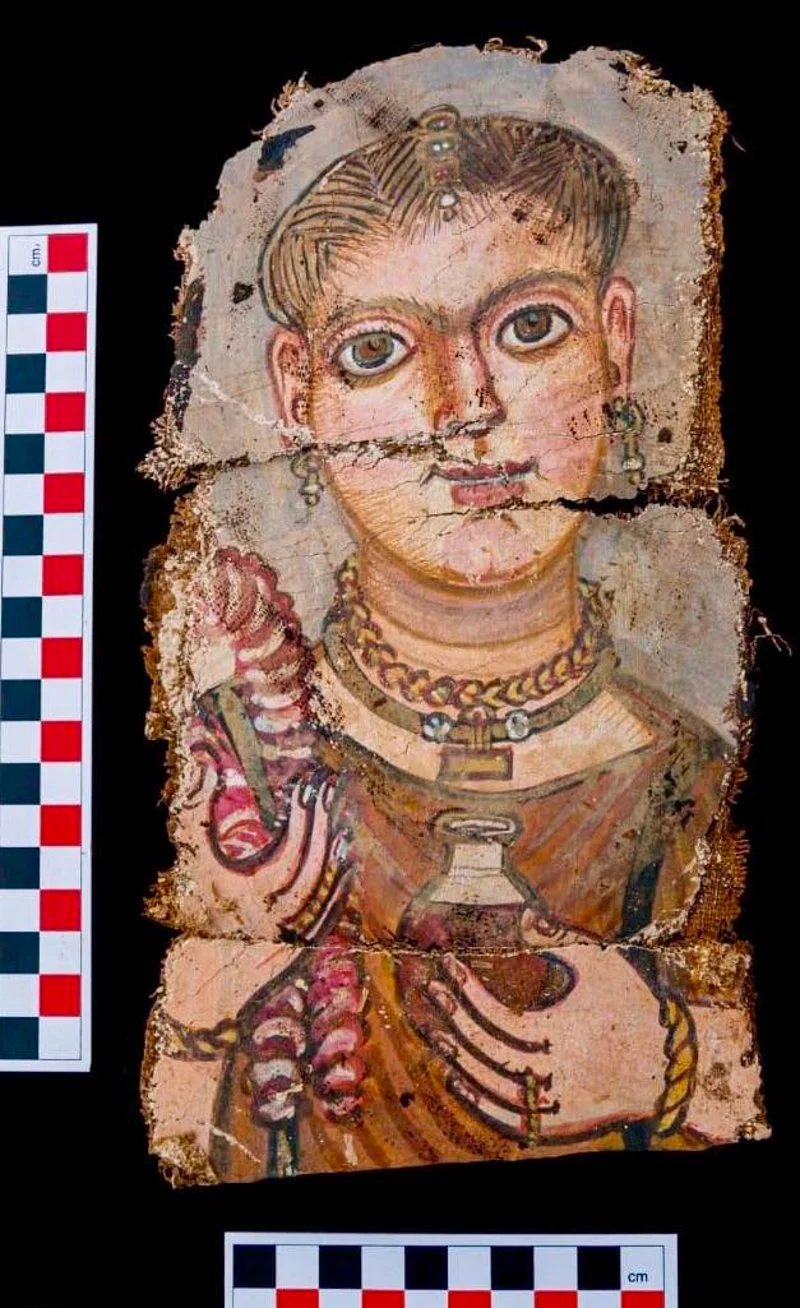
The oldest painted portraits to survive come from the Fayum region of Egypt, then a Roman province, and date from the first to the third century. They were painted on wooden panels and laid over the mummy wrappings like a mask. The sitters are shown from mid-chest, almost always frontal, and the light seems to come from a single source, which has led some scholars to suspect the subjects were painted while still alive. The first were dug up from a graveyard in 1887 by British archaeologist Flinders Petrie, and nearly a thousand now sit in museum collections around the world. The tradition ended in the fourth century.
What is hardest to forget is the look. The Fayum sitters stare straight out at us, close up, in a way post-Renaissance portraiture rarely does.
The portrait reborn in the North
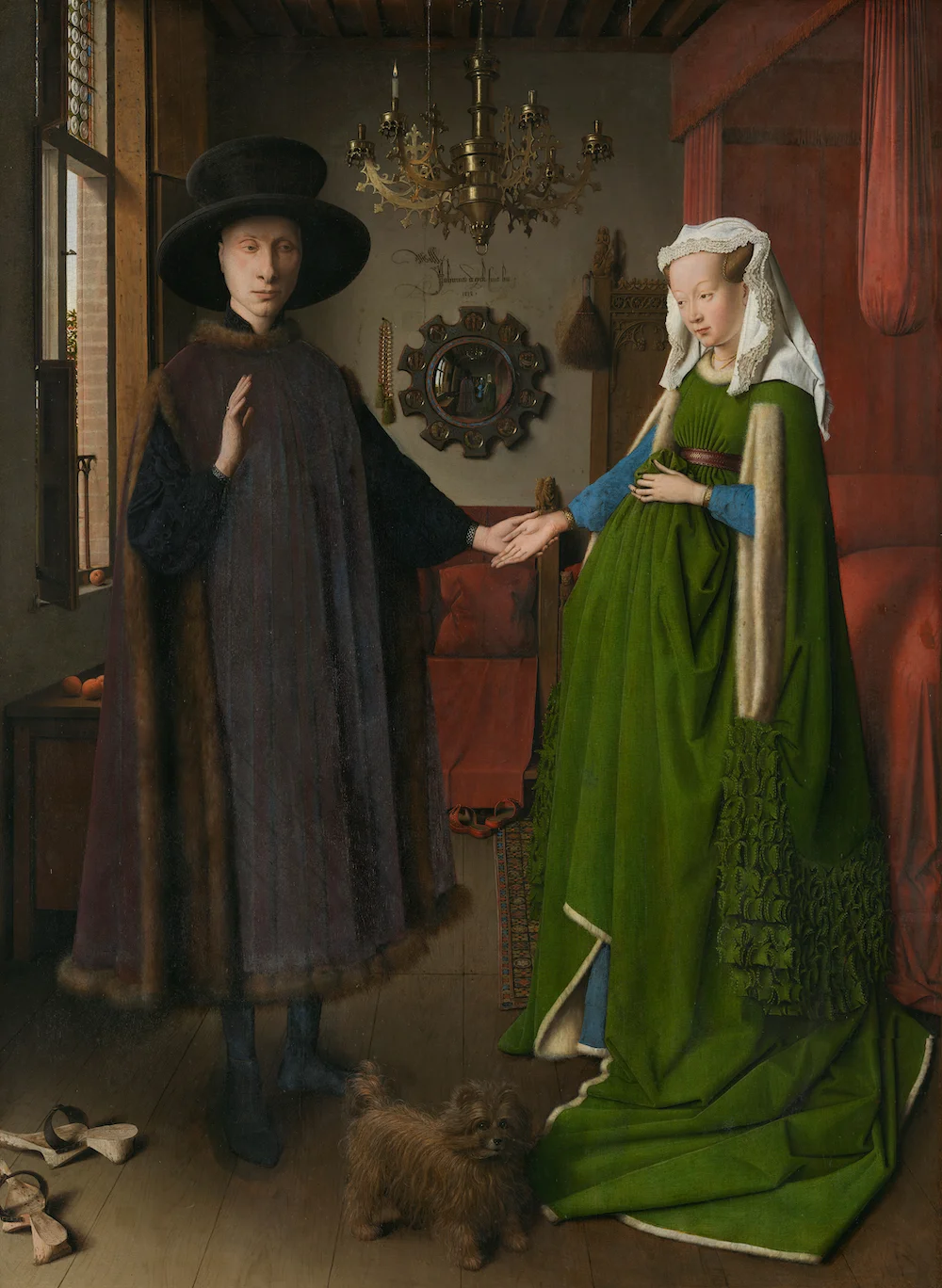
For a long time the portrait all but vanished as a genre of its own. It was brought back in the fifteenth century by painters from the Netherlands and Germany. Jan van Eyck's Arnolfini Portrait (1434, oil on oak, National Gallery, London) shows more than two faces: it shows a room, with garments, wooden slippers and a chandelier carrying a single flame. For years it was called the Arnolfini wedding portrait, but historians are no longer sure a wedding is being depicted. The prevailing view is that it is a double portrait of the Italian merchant Giovanni Arnolfini and his wife, in Bruges. In 1500 Albrecht Dürer painted himself facing the viewer straight on, a pose until then reserved for religious imagery. Later, in the Dutch world, the group portrait flourished, depicting not just people but guilds and institutions.
1839: photography enters the studio
On August 19, 1839, Daguerre's invention was made public. The process was temperamental and expensive, but within a few years studios opened, and customers chose their pose from a catalogue. Portraiture, for centuries the territory of painters, became an industry.
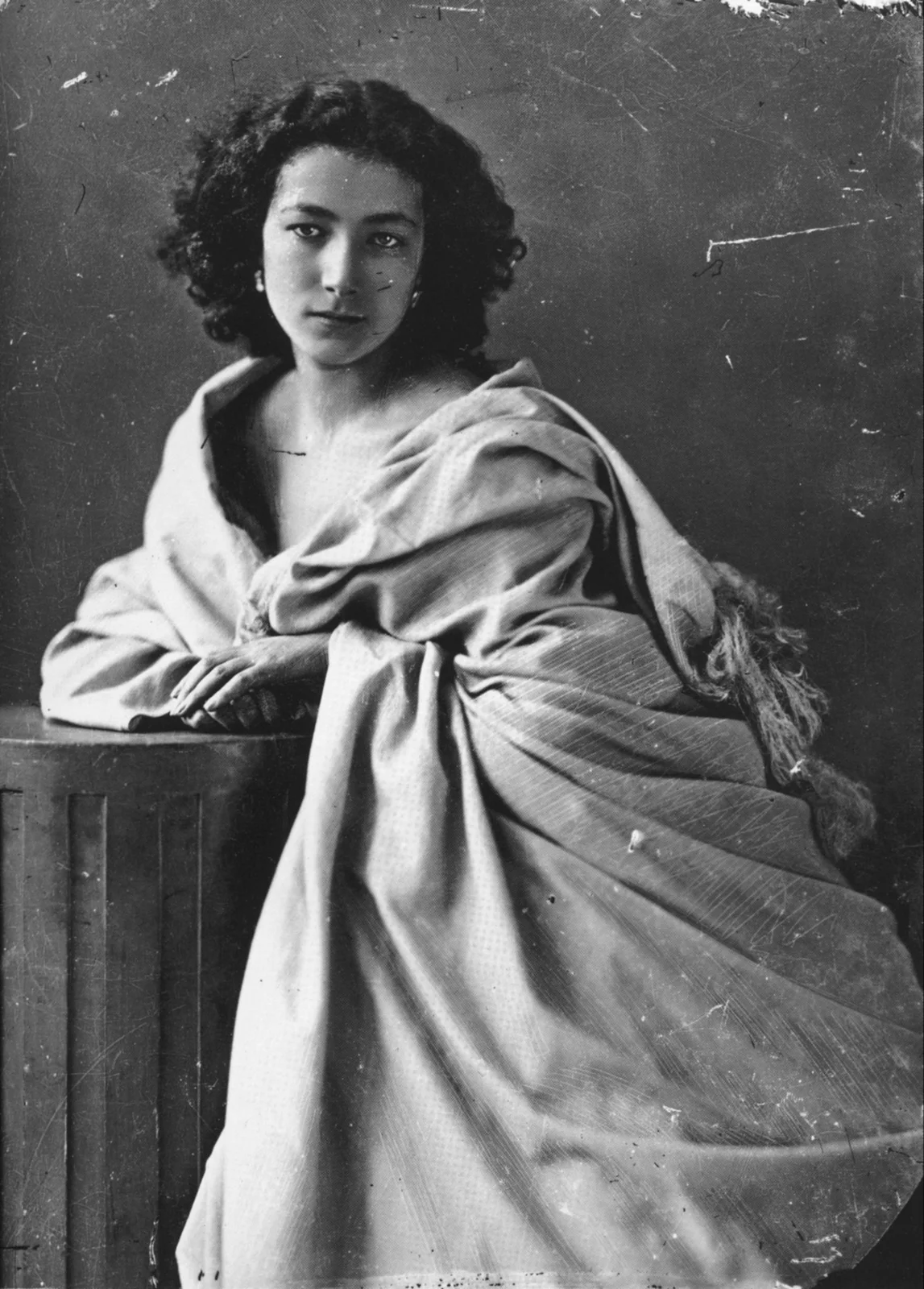
Nadar was among the first to treat it as something more. A committed republican, he photographed the intellectual circles of Paris rather than the aristocracy. He is said to have reconciled even Baudelaire with the idea of the photographic portrait.
Julia Margaret Cameron: the portrait as closeness
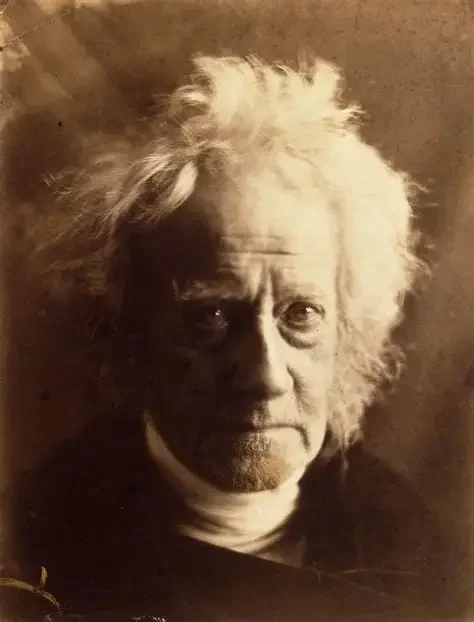
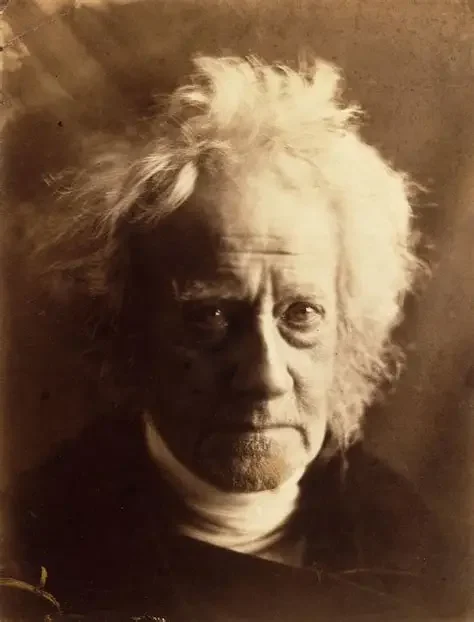
In 1863, at 48, Julia Margaret Cameron was given a camera, and within a few years she was one of the great portraitists of the century. She turned her home on the Isle of Wight into a studio, converting a henhouse and a coalhouse into a darkroom. She photographed friends and eminent contemporaries, among them Tennyson, Darwin, Carlyle and Herschel, very close up, with strong contrasts of light and shadow and a deliberately soft focus. Studio photographers criticised her, convinced she could not do better. Her 1867 portrait of Herschel, hair like a halo and eyes raised, remains the proof that the mistake was the critics': Cameron was after the essence of the man, not the passing detail.
August Sander: a society, face by face
In the 1920s Sander began an almost encyclopedic project, People of the Twentieth Century: portraits of Germans classified by trade and social type, from farmers and craftsmen to artists and the unemployed. In 1929 he published a selection of 60 portraits as Antlitz der Zeit ("Face of Our Time"), with an introduction by Alfred Döblin. The Nazi authorities confiscated the book and the printing plates were destroyed (sources give 1934 or 1936). A heterogeneous picture of German society did not suit them. The result is a distinctive kind of portrait: calm, frontal, almost scientific, yet with a clear point of view.
Irving Penn: the corner
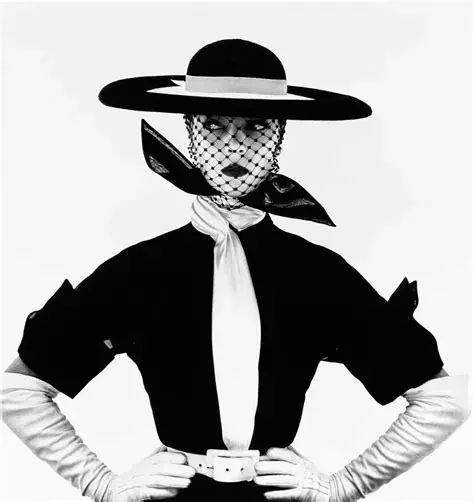
In 1948 Penn began photographing sitters in a corner made from two studio flats, over an old carpet. He said the confinement soothed people, and Duchamp, Capote, Duke Ellington and the Duchess of Windsor all stood in it. What emerges is an existential kind of portrait: the celebrity removed from their world and placed in an abstract, artificial corner where only the person remains.
Avedon and Arbus: the end of neutrality
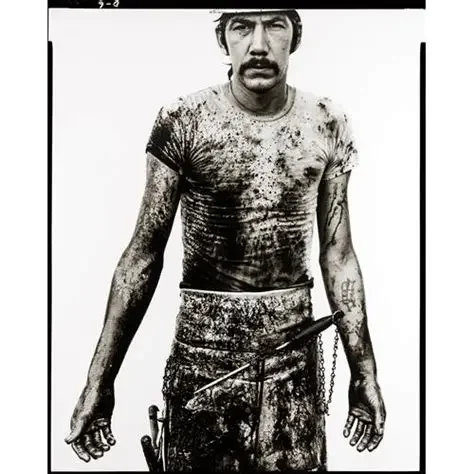
Between 1979 and 1984, on a commission from the Amon Carter Museum in Fort Worth, Richard Avedon travelled through 17 American states, held 752 sittings and exposed 17,000 sheets of film on a large-format camera. Ordinary people, many of them under hardship, stood in front of a seamless white backdrop that removed every reference to place. Some of the prints, shown in 1985, stood around four feet tall. Critics have asked whether the white ground flattens real people into figures to be consumed. At the opening, Avedon himself said that his West was no more accurate than John Wayne's.
Some years before, on February 28, 1967, MoMA opened New Documents, in which curator John Szarkowski brought together three younger photographers: Diane Arbus, Lee Friedlander and Garry Winogrand. What united them, he wrote, was a documentary language put to the service of personal expression. Arbus showed 32 portraits, among the most direct images of ordinary people of those years.
Cindy Sherman: the portrait becomes a role
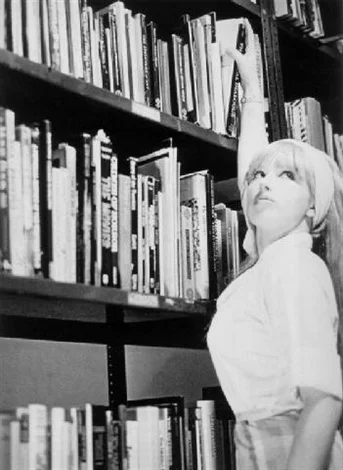
Meanwhile Cindy Sherman moved the question elsewhere. In Untitled Film Stills (1977–1980) she appears herself, playing invented heroines drawn from Hollywood, film noir and European art-house cinema. MoMA acquired the series in December 1995 (then 69 photographs; Sherman later added one, bringing it to seventy). Sherman is both author and subject, yet these are not self-portraits in the classic sense: the portrait becomes a role.
The 1990s: big scale, cold and tender looks
In the 1980s and 90s, in Düsseldorf, portrait photography took on a new scale. Thomas Ruff, a student of Bernd Becher, photographed his classmates as if for a passport: blank expressions, neutral background, large-format camera, prints about two metres tall. The detail is merciless precisely because there is nothing to interpret.
Rineke Dijkstra used the same frankness and added care. In her Beach Portraits (begun in 1992) she photographed teenagers and children standing at the water's edge in the US, Poland, Ukraine, Croatia and elsewhere, from a slightly low angle, in colour and on a large scale. The sitters seem caught between childhood and adulthood. The series has been compared both to Sander and Ruff, for its frontality, and to Arbus, for its affectionate strangeness.
What remains
From Fayum to Dijkstra, the portrait has moved from tribute to document, then to fiction and to a look that is clinical and tender at once. What has kept it alive is that it remains a place where one person looks at another, and both know they are being looked at.
Comments & Thoughts
0You must be signed in to join the conversation.
Sign In